
Overview
ELISA is widely used for quantitative detection in preclinical and biomedical research. However, data reliability often depends less on the method itself, and more on execution quality and control systems.
At Toprion, we focus on delivering consistent and decision-ready ELISA data through standardized workflows and quality control.
What Determines ELISA Data Quality
While ELISA is based on antigen‒antibody specificity, variability can arise from multiple factors:
- Sample quality (e.g., hemolysis, matrix interference)
- Reagent stability and batch variation
- Operational consistency (pipetting, incubation, washing)
These variables can directly impact sensitivity, specificity, and reproducibility.
Our Approach to ELISA Execution
We apply a structured workflow to minimize variability:
1. Standardized Sample Handling
- Controlled collection, storage, and preparation
- Pre-analysis checks to reduce matrix interference
2. Controlled Experimental Workflow
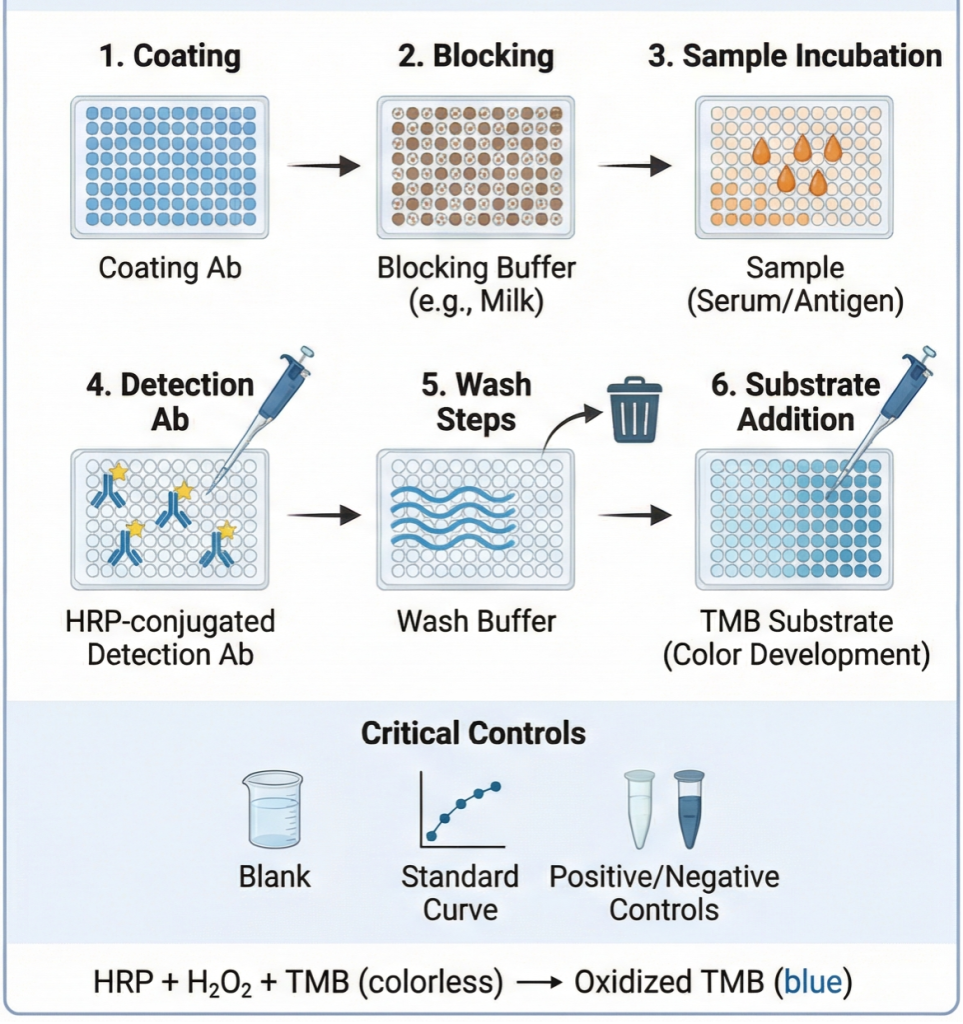
Based on the standard ELISA process (coating → blocking → incubation → washing → detection), we implement strict controls at each step.
Key controls include:
- Precise volume control (to avoid well-to-well variation)
- Consistent incubation conditions
- Optimized washing to reduce background noise
3. Data Quality & Analysis
- Use of standard curves and internal controls
- Defined acceptance criteria for each run
- Structured data analysis pipeline
Ensuring results are comparable, reproducible, and decision-ready
Common Challenges We Address
Typical ELISA issues include:
- High background signals
- Weak or inconsistent signal
- Edge effects across plates
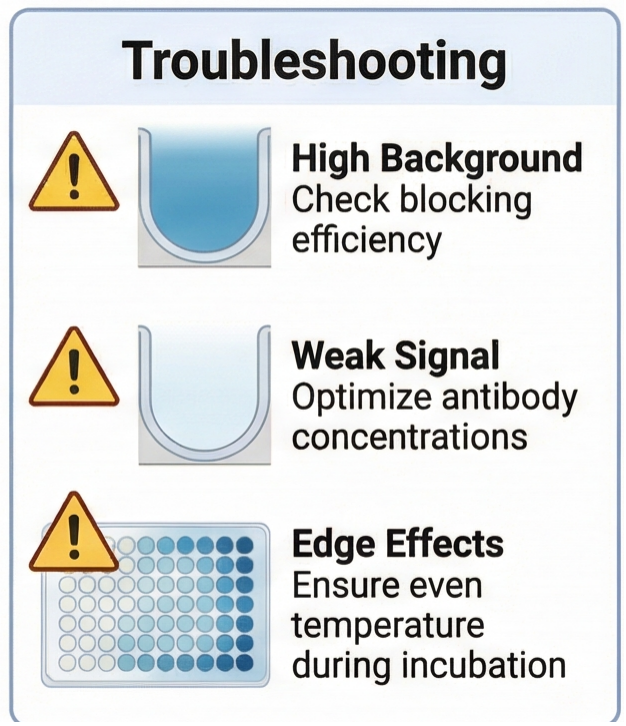
We address these through:
- Protocol optimization
- Reagent validation
- Environmental control
Application in Preclinical Research
Our ELISA platforms support:
- Biomarker quantification
- Cytokine profiling
- Drug response evaluation
- PK/PD-related assays
Key Takeaway
ELISA itself is not the challenge — consistent execution and quality control are. Reliable data requires more than protocol compliance It requires system-level control
Call to Action
Looking for reliable biomarker or assay support? We can help design and execute ELISA studies aligned with your research needs.