
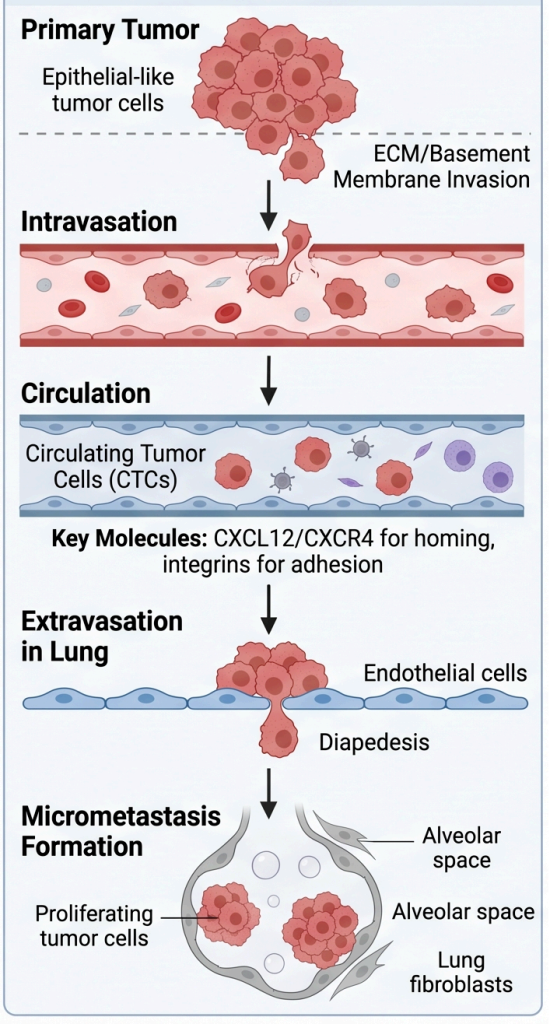
Lung metastasis is one of the most common progression patterns observed across solid tumors including breast cancer, melanoma, colorectal cancer, and renal carcinoma. Because metastatic dissemination involves multiple biological stages ― from circulation survival to lung colonization and outgrowth ― appropriate model selection is critical for generating reproducible and translationally meaningful data.
Unlike in vitro systems, in vivo lung metastasis models allow researchers to evaluate interactions between tumor cells and the pulmonary microenvironment under physiologically relevant conditions.
Why Model Selection Matters
Different lung metastasis models reproduce different stages of metastatic progression. As a result, the choice of model directly affects:
- Biological interpretation
- Drug response outcomes
- Reproducibility
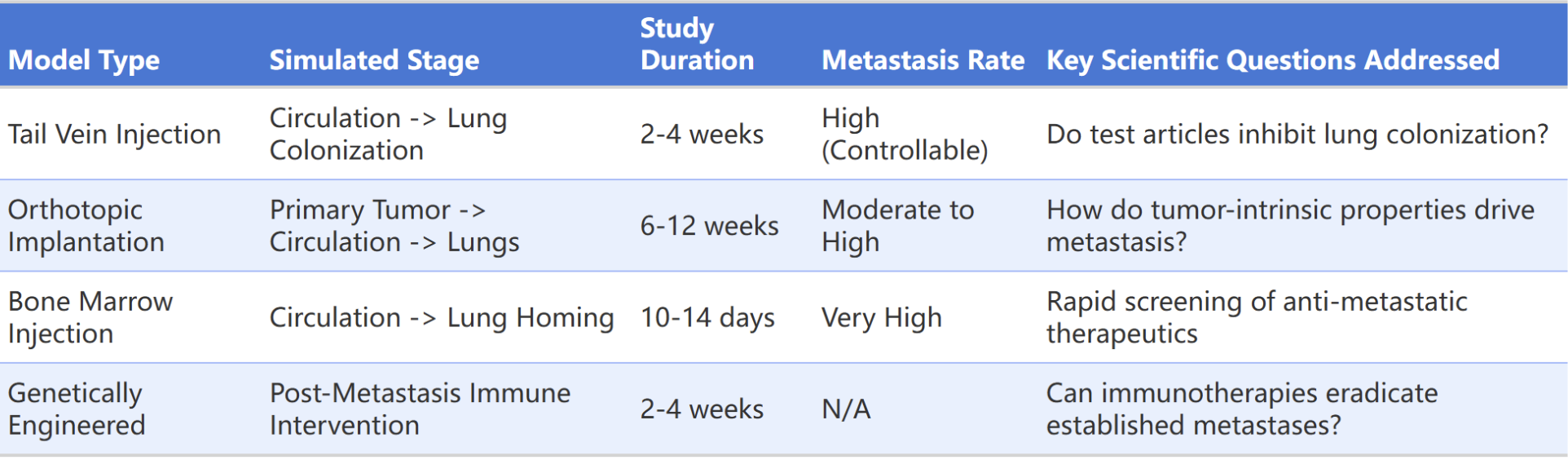
- Translational relevanceFor example, experimental metastasis systems efficiently evaluate lung colonization, while orthotopic spontaneous metastasis models better preserve primary tumor biology and tumor‒microenvironment interactions.Study design should therefore be guided by the underlying scientific question rather than by model convenience alone.
Common Lung Metastasis Modeling Strategies
Experimental Metastasis Models
Experimental metastasis models typically involve intravenous delivery of tumor cells through tail vein injection.
These systems are commonly used for:
- Anti-metastatic drug screening
- Lung colonization studies
- Gene-function validation
- Rapid in vivo efficacy assessment
Key Consideration
Because tumor cells are introduced directly into circulation, these models bypass early metastatic events such as local invasion and intravasation. While highly efficient for screening workflows, they may not fully reflect spontaneous disease progression.
Common sources of variability include:
- Cell aggregation prior to injection
- Injection inconsistency
- Host strain mismatch
- Misinterpretation of embolism versus metastatic lesions
Orthotopic Spontaneous Metastasis Models
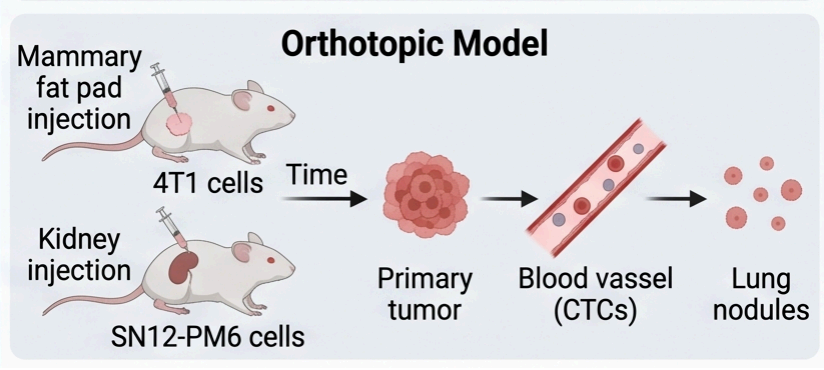
Orthotopic systems allow tumors to develop within their tissue of origin and metastasize naturally over time.
These models are frequently applied in:
- Tumor progression studies
- Tumor‒microenvironment interaction research
- Mechanistic metastasis studies
- Translational oncology programsCompared with experimental metastasis systems, orthotopic models generally provide stronger biological relevance but require longer study timelines and more complex experimental control.
Enhanced Dissemination Models
Enhanced dissemination approaches, including bone marrow‒assisted metastasis systems, are designed to increase metastatic efficiency and accelerate lung lesion formation.
These models are particularly useful for:
- Rapid screening workflows
- High-burden metastasis studies
- Breast cancer metastasis researchAlthough these systems improve experimental efficiency, interpretation should consider that the metastatic cascade is partially simplified compared with spontaneous dissemination models.
Post-Metastatic Therapeutic Models
Post-metastatic intervention models evaluate therapeutic efficacy after metastatic lesions have already formed.
These systems are commonly used in:
- CAR-T therapy studies
- Immunotherapy evaluation
- Oncolytic virus research
- Combination therapy assessmentA critical consideration in these studies is treatment timing relative to metastatic establishment, as therapeutic response may vary significantly depending on disease stage at intervention.
Validation Strategy Matters
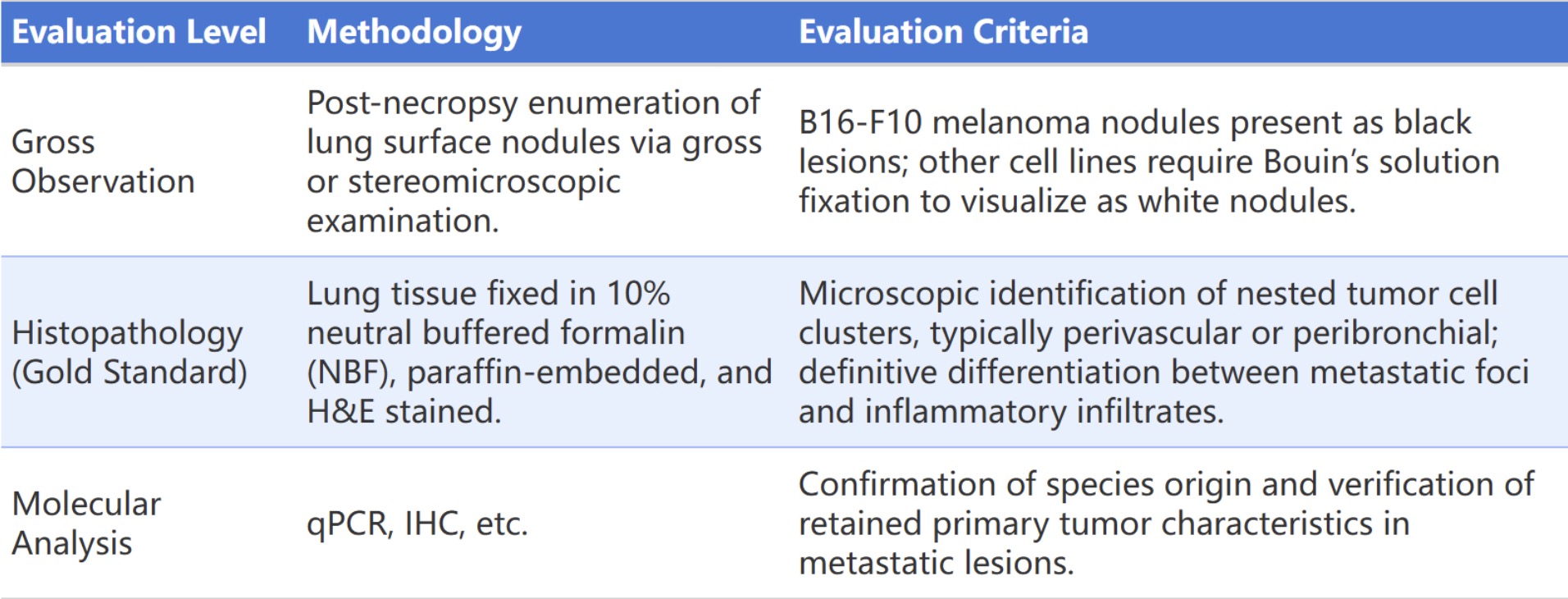
Reliable lung metastasis studies require more than visible lesion formation. Accurate interpretation typically depends on multi-layer validation strategies.
Histopathology remains the gold standard for confirming metastatic lesions and differentiating true metastatic foci from inflammatory or injection-related artifacts.
Additional validation approaches may include:
- Gross lesion assessment
- H&E staining
- qPCR analysis
- Immunohistochemistry (IHC)
- Molecular biomarker confirmation
Translational & Study Design Considerations
There is no universal “best” lung metastasis model. Appropriate model selection should always align with the intended study objective.
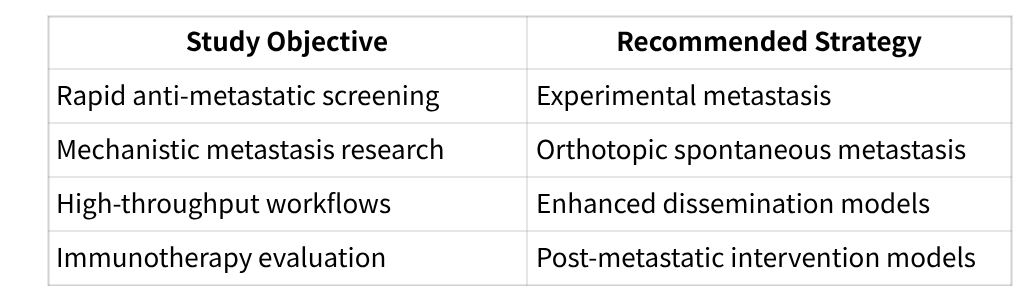
Additional considerations may include:
- Immune-competent versus immunodeficient systems
- Endpoint selection strategy
- Imaging requirements
- Metastatic burden consistency
- Translational relevance to clinical disease progression
Conclusion
Reliable preclinical lung metastasis research depends not only on technical execution, but also on appropriate model-context alignment and rigorous validation strategies.
Different metastasis systems capture distinct aspects of tumor dissemination biology. Understanding these distinctions is essential for generating reproducible and translationally meaningful preclinical data.
At TOPRION, we support metastasis-focused preclinical programs through tailored model selection, study optimization, and integrated validation workflows designed to improve study reliability and interpretability.