
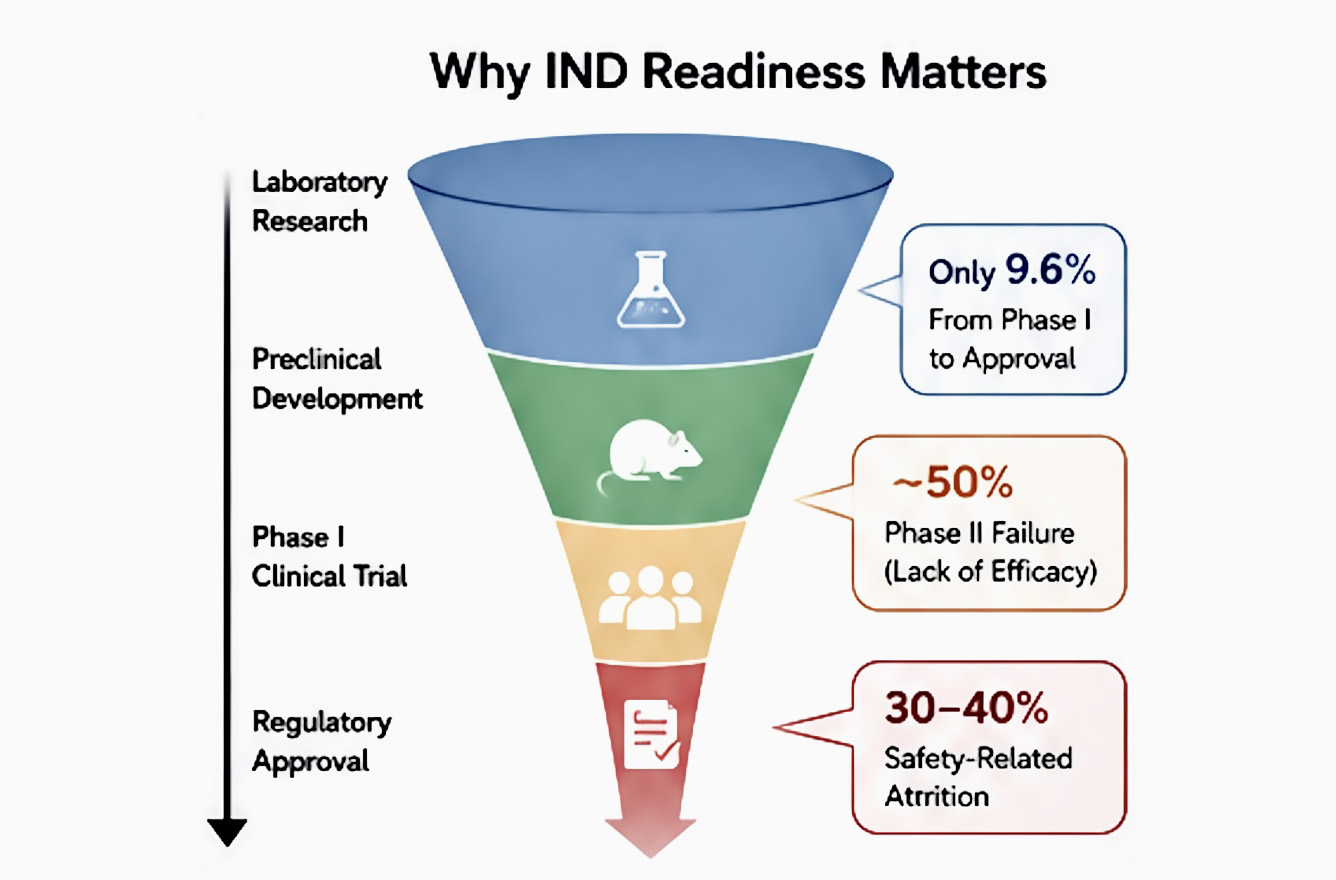
Bringing a small molecule from discovery to clinical development is a complex process that requires far more than identifying a biologically active compound. Despite promising early-stage data, many development programs fail before or shortly after entering clinical trials due to insufficient efficacy, unexpected safety findings, or inadequate translational evidence.
For many programs, these challenges do not originate from a single experiment. Instead, they arise when critical preclinical decisions are made in isolation rather than as part of an integrated development strategy.
Building a successful IND package requires more than generating data―it requires generating the right data at the right stage of development.
Four Pillars of IND Readiness
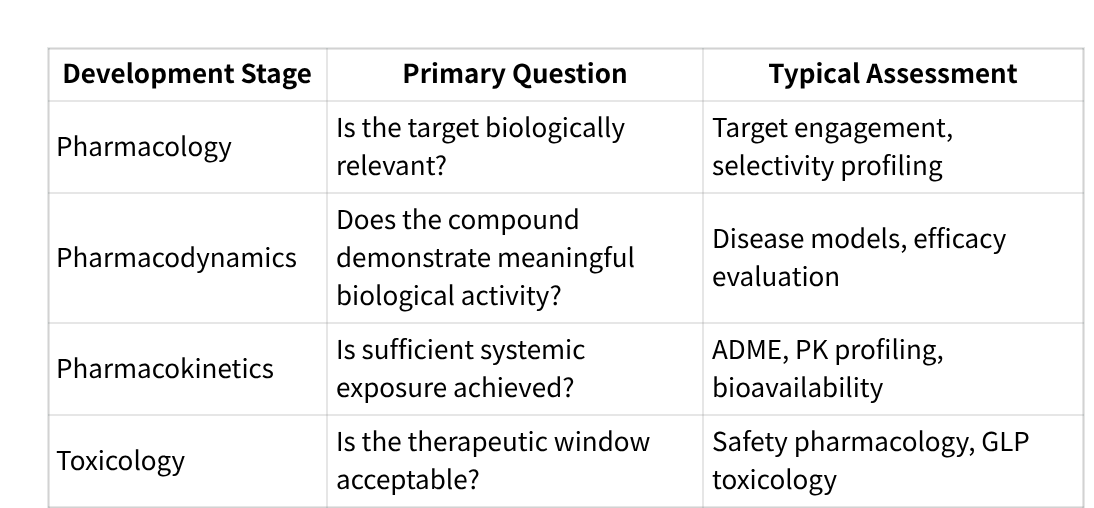
Successful IND-enabling programs rely on four interconnected scientific disciplines: pharmacology, pharmacodynamics, pharmacokinetics, and toxicology.
Rather than functioning independently, these disciplines collectively determine whether a candidate demonstrates sufficient efficacy, appropriate exposure, and an acceptable safety profile to support clinical development.
Pharmacology: Demonstrating Target Confidence
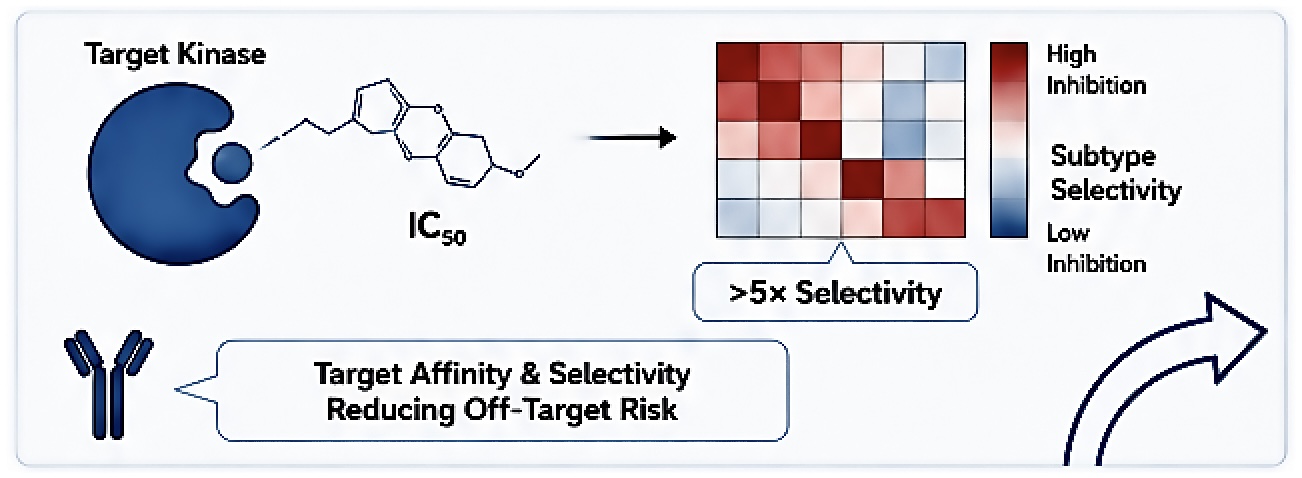
Early pharmacology establishes whether a compound interacts with its intended target and whether that interaction is sufficiently selective to minimize off-target effects.
As drug discovery becomes increasingly precision-driven, target engagement alone is no longer sufficient. Selectivity profiling across related protein families has become an important component of lead optimization and regulatory confidence.
For kinase inhibitors and other highly homologous target classes, subtype selectivity may significantly influence both efficacy and safety outcomes.
Pharmacodynamics: Biological Activity Requires Adequate Exposure
Strong in vitro potency does not always translate into meaningful in vivo efficacy.
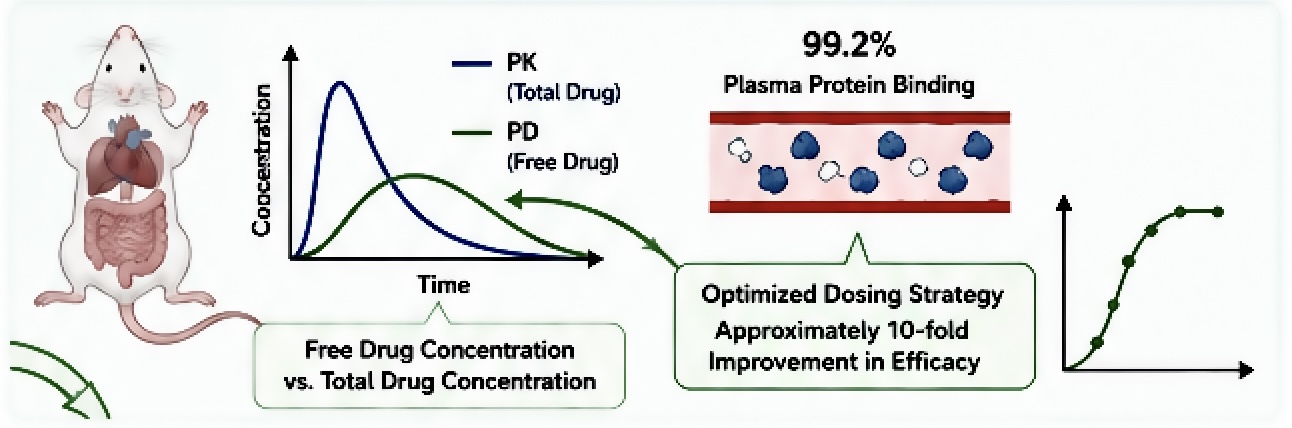
One of the most common reasons is insufficient free drug exposure caused by unfavorable pharmacokinetic properties, including extensive plasma protein binding.
Integrating pharmacodynamic observations with pharmacokinetic profiling helps distinguish whether limited efficacy results from inadequate biological activity or inadequate systemic exposure.
This integrated PK/PD perspective supports more informed decisions regarding lead optimization, formulation development, and dosing strategy.
Pharmacokinetics: Predicting Human Exposure
Pharmacokinetic studies extend beyond describing ADME characteristics. Their broader objective is to predict clinical exposure and support translational decision-making.
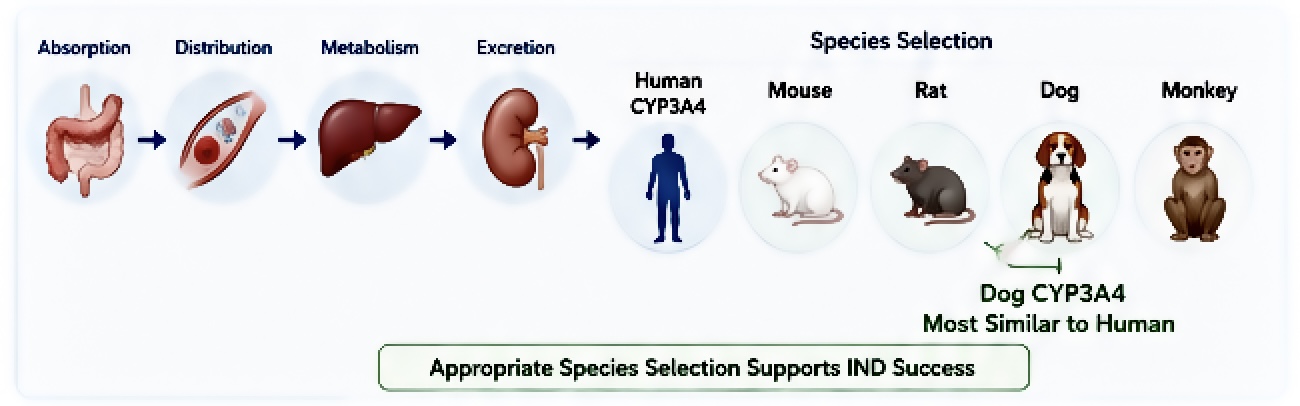
Species selection is one of the most important considerations during IND-enabling development. Differences in metabolic enzymes, particularly CYP450 isoforms, may substantially influence the predictive value of toxicology studies.
Selecting an appropriate nonclinical species helps improve the relevance of safety assessment and reduces the risk of additional regulatory studies later in development.
Toxicology: Evaluating the Therapeutic Window
A promising efficacy profile alone is insufficient to support clinical development.
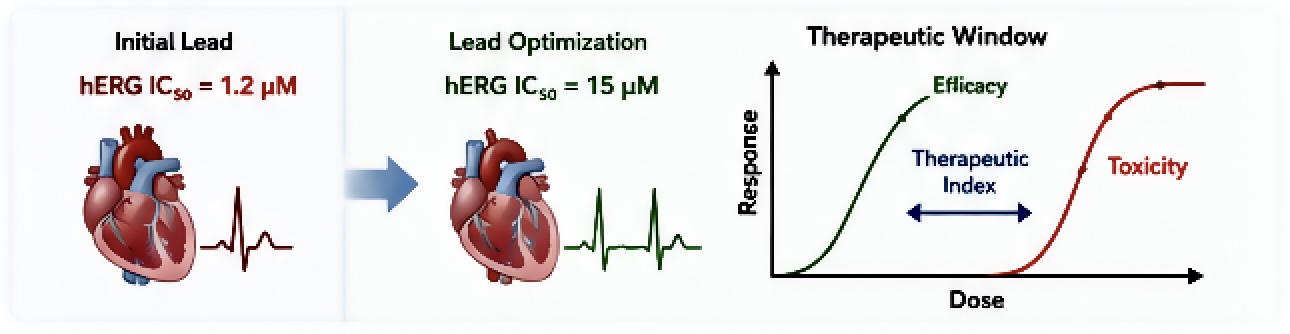
Safety assessment aims not only to identify toxicological findings but also to determine whether an acceptable therapeutic window exists between pharmacological activity and adverse effects.
Early evaluation of cardiovascular safety, including hERG liability assessment, has become a routine component of small molecule development and frequently guides lead optimization before IND submission.
Integrating Data for Better Development Decisions
Successful IND-enabling research depends not on individual datasets, but on how those datasets are interpreted together.
Pharmacology explains target engagement.
Pharmacodynamics demonstrates biological activity.
Pharmacokinetics defines systemic exposure.
Toxicology evaluates clinical risk.
When integrated, these disciplines provide a comprehensive framework for assessing whether a candidate is ready to advance toward clinical development.
Looking Ahead
The complexity of modern small molecule drug development continues to increase as therapeutic targets become more sophisticated and regulatory expectations continue to evolve.
Generating robust preclinical data is no longer sufficient on its own. Success increasingly depends on integrating pharmacology, efficacy, pharmacokinetics, and safety into a coherent development strategy that supports confident decision-making throughout the IND process.
At Toprion Bio, we provide integrated preclinical research solutions spanning pharmacology, pharmacodynamics, pharmacokinetics, and toxicology to help accelerate small molecule drug development from target validation to IND submission.